Introduction
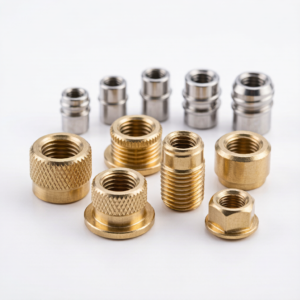
Threaded inserts — often called insert nuts, 螺紋衣帶, or embedded nuts — are small but critical components in modern manufacturing. Whether you are designing a consumer electronic device, an automotive component, or a medical instrument, choosing the right insert nut can make the difference between a durable, reliable product and one that fails in the field.
But with so many options available — different materials, profiles, thread standards, and installation methods — how do you make the right choice?
This guide walks you through everything you need to know to select the optimal insert nut for your plastic assembly.
Step 1: Understand Your Application Requirements
Before diving into specifications, answer these fundamental questions:
| Question | Why It Matters |
|---|---|
| What is the base material? | Determines installation method and insert profile |
| What is the operating environment? | Dictates material choice (brass vs stainless steel) |
| What loads will the insert bear? | Determines insert size, depth, and knurl type |
| Will the screw be removed repeatedly? | Influences thread durability requirements |
| What is the production volume? | Affects installation method selection and cost |
| Any regulatory requirements? | RoHS, REACH, FDA, or other compliance needs |
Step 2: Choose the Right Material
The two most common materials for insert nuts are brass and stainless steel. Each has distinct advantages.
Brass Insert Nuts (C3604 / H59)
Brass is the industry workhorse for threaded inserts. It offers an excellent balance of machinability, corrosion resistance, and cost-effectiveness.
| Pros | Cons |
|---|---|
| Excellent machinability — tight threads, smooth finish | Lower tensile strength than steel |
| Good corrosion resistance in normal environments | Not suitable for high-temperature applications |
| Cost-effective for medium to high volumes | Can tarnish over time without plating |
| Good thermal conductivity — helps during heat staking | Not ideal for marine or chemical environments |
Best for: Consumer electronics, general plastic enclosures, indoor applications, cost-sensitive projects.
Stainless Steel Insert Nuts (SUS303 / SUS304 / SUS316L)
Stainless steel inserts are the premium choice for demanding environments.
| Pros | Cons |
|---|---|
| Superior corrosion and chemical resistance | Higher material cost |
| High tensile and shear strength | More difficult to machine — slightly looser tolerances |
| Excellent high-temperature performance | Heavier than brass |
| Ideal for outdoor, marine, and medical applications | May require passivation for optimal corrosion resistance |
Best for: Automotive under-hood components, outdoor equipment, medical devices, food processing machinery, marine applications.
Quick Rule: If your product lives indoors and cost is a concern → brass. If it faces moisture, chemicals, heat, or high mechanical stress → stainless steel.
Step 3: Select the Insert Profile
The outer profile of the insert determines how well it grips the surrounding plastic. Here are the most common types:
Straight Knurl
- Most common profile
- Good all-around torque and pull-out resistance
- Suitable for heat staking and ultrasonic insertion
- Cost-effective and widely available
Diamond Knurl
- Cross-hatched pattern provides multi-directional grip
- Higher torque resistance than straight knurl
- Preferred for applications with rotational loads
- Slightly more expensive to manufacture
Hexagonal Profile
- Six flat sides provide maximum torque resistance
- Often used in insert molding applications
- Prevents rotation even under high torsional loads
- Requires matching mold geometry
Flanged Head
- Integrated collar/flange sits flush against the surface
- Prevents the insert from sinking below the mounting plane
- Provides a clean, finished appearance
- Distributes load across a larger surface area
| Profile | Torque Resistance | Pull-Out Strength | Best Installation Method |
|---|---|---|---|
| Straight Knurl | ★★★☆☆ | ★★★★☆ | Heat Staking, Ultrasonic |
| Diamond Knurl | ★★★★☆ | ★★★★☆ | Heat Staking, Ultrasonic |
| Hexagonal | ★★★★★ | ★★★☆☆ | Insert Molding |
| Flanged + Knurl | ★★★★☆ | ★★★★★ | Heat Staking, Ultrasonic |
Step 4: Decide — Blind-Hole or Through-Hole?
Blind-Hole (Closed-End) Inserts
- One end is closed — the screw cannot pass through
- Provides a clean, sealed appearance from the outside
- Prevents dust, moisture, and debris from entering the assembly
- Limited screw depth — must match screw length to insert depth
Best for: Visible exterior surfaces, sealed enclosures, applications requiring a clean cosmetic finish.
穿孔 (Open-End) Inserts
- Both ends are open — the screw can pass completely through
- No restriction on screw length
- Ideal for multi-layer stacking and clamping applications
- Does not provide sealing
Best for: PCB stacking, multi-component clamping, adjustable mounts, applications where screw length may vary.
Step 5: Match the Installation Method
Your choice of installation method affects both the insert design and your production process.
| Method | How It Works | Pros | Cons | Best For |
|---|---|---|---|---|
| Heat Staking | Insert is heated and pressed into a pre-molded hole; plastic melts and flows around the knurl | Low equipment cost, simple process | Slower cycle time, operator-dependent | Low to medium volumes, prototyping |
| Ultrasonic Insertion | Ultrasonic vibrations melt plastic around the insert as it is pressed in | Fast, consistent, automated | Higher equipment cost | Medium to high volumes |
| Insert Molding | Insert is placed in the mold before plastic injection; becomes fully encapsulated | Strongest bond, no secondary step | Higher mold cost and complexity | High volumes, critical applications |
| Cold Pressing | Insert is mechanically pressed into an undersized hole | No heat, simple, fast | Lower pull-out strength, stress on plastic | Soft thermoplastics, simple assemblies |
Pro Tip: If you are starting with low volumes and plan to scale, consider designing your hole geometry to accommodate both heat staking and ultrasonic insertion — this gives you flexibility as volumes grow.
Step 6: Specify Thread and Dimensions
Thread Standard
- Metric (ISO): M2, M2.5, M3, M4, M5, M6, M8 — most common globally
- UNC/UNF (Imperial): 2-56, 4-40, 6-32, 8-32 — common in North America
- Custom Threads: Available for specialized applications
Key Dimensions to Specify
| Dimension | Description |
|---|---|
| OD (Outer Diameter) | The external diameter of the insert body |
| Length | Overall length of the insert |
| Thread Size | Internal thread specification |
| Flange Diameter | Diameter of the flange (if applicable) |
| Knurl Pitch | Spacing of the knurl pattern |
| Pilot Diameter | Reduced-diameter tip for easy alignment (optional) |
Step 7: Don’t Forget Surface Treatment
Surface treatment affects corrosion resistance, appearance, and — for SMT nuts — solderability.
| Treatment | Material | Benefits |
|---|---|---|
| Natural / Bare | Brass, Stainless Steel | Cost-effective, no added process |
| Nickel Plating | Brass, Steel | Enhanced corrosion resistance, bright finish |
| Tin Plating | Brass, Steel | Excellent solderability (SMT 堅果) |
| Zinc Plating | Steel | Good corrosion protection, economical |
| Passivation | Stainless Steel | Removes free iron, maximizes natural corrosion resistance |
| Black Oxide | Steel | Mild corrosion protection, matte black appearance |
Quick Decision Matrix
| If You Need… | Choose… |
|---|---|
| General-purpose plastic fastening | Brass, straight knurl, heat stake |
| High-strength, harsh environment | Stainless steel, diamond knurl |
| Clean cosmetic surface | Brass, flanged, blind-hole |
| Maximum bond strength | Insert molding, hexagonal or knurled |
| PCB assembly | SMT nut, tin-plated, tape & reel |
| Multi-layer clamping | Through-hole, straight knurl |
| Marine or outdoor use | SUS316L, passivated |
| Low-cost prototyping | Brass, straight knurl, heat stake |
Common Mistakes to Avoid
- Mismatched hole size: Too large = weak grip. Too small = cracked plastic. Always follow the insert manufacturer’s recommended hole diameter and tolerance.
- Wrong installation temperature: Overheating during heat staking degrades the surrounding plastic. Underheating results in poor melt flow and weak bonding.
- Ignoring screw engagement length: The screw should engage at least 1.5× the thread diameter for optimal strength. For example, an M3 screw should engage at least 4.5 mm of thread.
- Skipping material compatibility: Some plastics (like POM or PP) are difficult to bond with inserts. Consult your insert supplier if you are working with challenging materials.
- No prototype testing: Always test insert performance in your actual plastic material and wall thickness before committing to production tooling.
Why Partner with XinLianHao Hardware?
At 東莞新聯豪精密五金有限公司, 有限公司., we manufacture a full range of insert nuts — from standard catalog items to fully custom solutions. Here is what sets us apart:
- Expert Guidance: Not sure which insert is right for your application? We help you choose — based on your material, process, and performance requirements.
- Custom Manufacturing: Send us your drawing or sample, and we produce to your exact specifications.
- Quality Consistency: Tight tolerances, clean threads, and consistent surface finish — batch after batch.
- Competitive Pricing: Dongguan manufacturing efficiency, delivered globally.
- Fast Turnaround: Samples in days, production in weeks.
Contact us today for a free consultation and quotation.
📧 163. com | 📞 +86 138-2326-5011